Teddy Bear Illustrations That Bring Warmth to Your Creative Projects
There's something universally comforting about a teddy bear. That soft, familiar shape crosses cultural boundaries and speaks a language everyone understands—nostalgia, comfort, childhood wonder, and gentle affection. When you bring a well-crafted teddy bear illustration into a project, you're not just adding visual decoration. You're tapping into an emotional shorthand that resonates with people on a deeply personal level.
But not all teddy bear graphics are created equal. The difference between a flat, forgettable clip-art bear and one that genuinely enhances your work often comes down to the quality of the source file, how it's organized, and whether it actually bends to your creative needs rather than forcing you to work around its limitations.
Where Teddy Bear Illustrations Find Their Purpose
A teddy bear graphic might seem like a niche asset, but once you start examining the creative landscape, you'll spot these gentle characters everywhere. They appear in contexts that might surprise you, quietly doing the work of softening a brand message or adding approachability to an otherwise sterile layout.
Children's product packaging is the most obvious home for teddy bear imagery. A boutique baby clothing brand might use a refined, minimalist bear silhouette on hang tags and tissue paper, creating an unboxing experience that feels intentional and premium. The same brand could pull the bear into social media templates, email headers, and website accents, maintaining visual consistency without hiring a custom illustrator for every touchpoint.
But the uses extend far beyond nurseries and toy stores. Healthcare providers, particularly pediatricians and family dentists, often incorporate friendly animal characters into their patient materials. A teddy bear illustration placed on a appointment reminder card or a treatment explanation brochure can subtly reduce anxiety for young patients. The bear becomes a silent ambassador, communicating warmth before the child ever steps through the door.
The Value of Editable Vector Files in Real Workflows
Here's where many well-intentioned designers hit a wall. They find a teddy bear graphic they love, license it, and then discover it's a flattened file that fights every attempt at customization. Maybe the bear is the right shape but the wrong color for their palette. Perhaps they need to simplify it for a favicon or enlarge it for a trade show banner without losing crispness. When the file format doesn't support these adjustments, that supposedly perfect illustration becomes a source of frustration.
Having access to properly structured AI and EPS files changes the equation entirely. You're not stuck with someone else's creative decisions. The bear's scarf can shift from red to teal to match your brand identity. The fur tones can warm up or cool down depending on whether you're designing for autumn packaging or a winter campaign. You might isolate just the bear's face for an app icon, or recolor the entire figure as a single silhouette for a sophisticated logo mark.
This level of editability matters especially when you're preparing files for both digital screens and physical printing. A teddy bear that looks charming on a website header at 72 DPI needs to hold its integrity when blown up for a store window display or printed on textured cardstock. Vector formats maintain those clean curves and precise edges regardless of scale, which means you're not nervously zooming in to check for pixelation before sending files to production.
Organized Files Save Sanity
Anyone who has opened a poorly constructed vector file knows the particular frustration of hunting through unnamed layers and ungrouped objects. Time ticks away as you click through dozens of anonymous paths, trying to figure out which piece controls the bear's ear or how to separate the foreground elements from the background.
When a teddy bear illustration set arrives with a neatly organized file and layer structure, the creative process stays focused on the work itself rather than on forensic file investigation. Each variation of the bear sits logically in its own space. Colors separate cleanly. You can target specific elements without accidentally disturbing others. This organization proves its worth repeatedly—when deadlines are tight, when clients request last-minute changes, or when you're juggling multiple projects and simply cannot afford to waste mental energy on file management.
Three Variations Open More Doors Than One
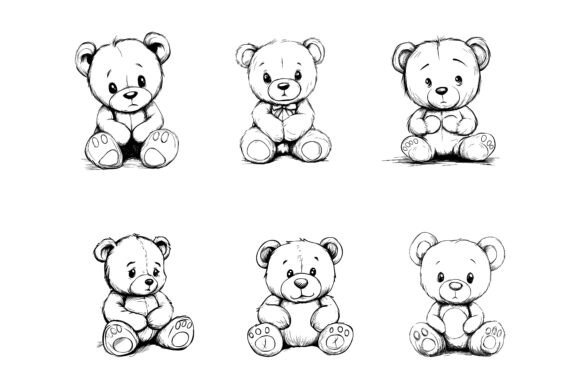
A single teddy bear pose limits your storytelling. But three variations of the same character in a consistent style suddenly give you narrative flexibility. Picture a children's book layout where the bear appears sitting thoughtfully on one page, standing with arms open on another, and curled up sleeping on a third. The consistent illustration style ties the pages together, while the different positions allow the bear to participate actively in the story rather than functioning as a static decoration.
App designers might use one variation for the onboarding screen, another for the main interface, and a third for achievement badges or reward notifications. Infographic creators can position different bear versions to guide viewers through data points, with each pose suggesting a different emotional response to the information—curiosity, celebration, or calm reflection.
Having these variations also means you can maintain visual interest across a campaign without introducing new characters that might dilute your message. A seasonal promotion for a family-oriented brand could feature the same teddy bear in different contexts across email, social, and print, building recognition and affection over time.
Cross-Platform Compatibility as a Practical Necessity
Creative teams rarely operate on homogeneous systems. A designer working on a Mac might hand files to a production specialist on Windows, who then passes assets to a web developer running Linux. The teddy bear illustrations need to move through these transitions without corruption, font issues, or format incompatibilities. Files designed for both Mac and Windows environments from the start eliminate the tedious back-and-forth of troubleshooting compatibility problems when deadlines are breathing down your neck.
The inclusion of JPG versions alongside the vector files addresses another practical reality: sometimes you need a quick, lightweight preview or a raster version for email signatures, quick mockups, or content management systems that don't handle vector uploads gracefully. Having these alternatives ready to go means fewer export steps in your workflow.
Attention to Detail That Holds Up Under Scrutiny
When a teddy bear appears on a product that people will hold in their hands—a baby blanket tag, a greeting card, a sticker sheet—the quality of the illustration directly reflects on the brand. Viewers may not consciously analyze line weights or curve smoothness, but they feel the difference between work that's been thoughtfully crafted and work that's been hastily assembled.
Consistency across the variations matters enormously in real-world application. If the bear's proportions shift slightly between poses, or if the fur texture treatment varies, that inconsistency creates subtle visual friction. Perfection in details means you can place two variations side by side and they clearly belong to the same character family. This reliability lets you build compositions with confidence, knowing that each element will hold up its end of the visual conversation.
Color Customization in Practice
Brand color adherence isn't optional for most commercial projects. A teddy bear illustration that ships only in preset browns and creams might instantly disqualify itself from campaigns built around entirely different palettes. The ability to change colors easily transforms the illustration from a fixed asset into a flexible resource.
Maybe your brand palette leans toward cool grays and muted lavenders. A traditional warm-brown teddy bear would clash awkwardly. But with editable vector layers, you can recolor the bear to harmonize with those cooler tones while preserving the soft, approachable character that makes it effective in the first place. The same flexibility applies to seasonal adjustments—warmer tones for autumn campaigns, pastels for spring, crisp whites for winter themes.
You might also modify the icon for different contexts within the same project. A slightly desaturated version for background elements, a brighter treatment for calls-to-action, a monochrome variation for single-color print scenarios. These adaptations happen quickly when the underlying file structure supports them.
Practical Applications Across Industries
Publishing teams creating children's educational content can weave teddy bear illustrations through workbooks, flashcards, and digital learning platforms. The consistency across formats reinforces recognition, while the ability to edit colors and details allows the bears to participate in specific learning scenarios—counting exercises, emotional literacy cards, or storytelling prompts.
Event planners designing baby shower or first birthday party materials find teddy bear graphics endlessly useful. Invitation suites, signage, favor tags, thank-you cards—each piece benefits from shared visual language, and editable variations prevent the repetition from feeling monotonous. The bear on the invitation gazes warmly at the recipient, while the bear on the thank-you card waves goodbye, creating a subtle emotional arc across the event's printed materials.
User interface designers working on apps for families or children can use teddy bear illustrations as friendly navigation cues, loading state animations, or achievement markers. A small bear perched near a progress bar can make waiting feel less frustrating. Another variation could celebrate a completed task, turning a functional notification into a moment of delight.
Nonprofit organizations focused on children's welfare often need gentle, reassuring visuals for fundraising materials and awareness campaigns. A teddy bear illustration carries warmth without being saccharine, and its familiarity can make difficult topics feel more approachable. Editable files let organizations adapt the same core illustration for different campaigns, preserving recognition while tailoring the message.
Things Worth Considering Before You Begin
Even the best illustration set benefits from thoughtful planning. Consider your primary output medium early. If most of your work lives in print, you'll want to test color profiles and ensure the CMYK conversions maintain the warmth you expect. If digital screens are your main canvas, you might push the colors brighter or adjust contrast for visibility on mobile devices.
Think about the scale at which your teddy bear will typically appear. The detail level that reads beautifully at poster size might become muddy when shrunk to a social media profile icon. Fortunately, the ability to modify the illustration means you can simplify or adjust line weights for smaller applications without losing the character's essential personality.
Also consider whether the teddy bear will stand alone or interact with other design elements. If you're combining the illustration with typography, photography, or other illustrated characters, test those pairings early. The bear's visual weight, color treatment, and stylistic approach need to feel cohesive with everything around it. Since you can edit freely, you're empowered to make those adjustments rather than compromising on other elements to accommodate an inflexible graphic.
Making the Illustration Truly Yours
The most memorable uses of stock illustration happen when creators treat the asset as a starting point rather than a finished statement. You might add a subtle texture overlay to give the teddy bear a hand-drawn feel that aligns with an artisanal brand. You could incorporate the bear into a larger illustrated scene, surrounding it with custom-drawn elements that deepen the narrative. You might extract just the bear's outline for a debossed effect on product packaging, or apply gradient treatments that echo other brand visuals.
Because the files are structured for editing, these creative explorations remain accessible. You're not locked into a specific presentation. The illustration grows and adapts alongside your project, which means the initial investment continues to pay dividends across multiple uses, campaigns, and even entirely new projects that emerge months or years down the road.