Transforming Complex Data into Clear Narratives with Business Analysis Presentation Tools
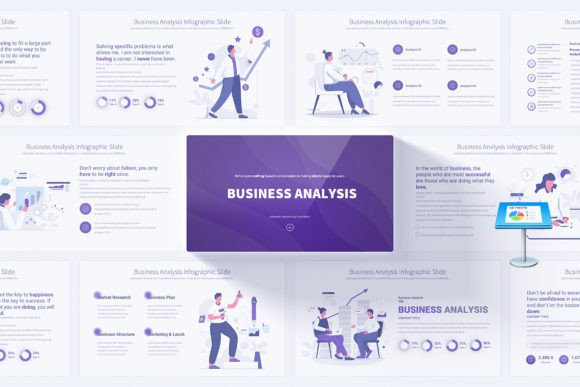
Every business professional has experienced the moment when a promising idea collapses under the weight of a poorly designed slide deck. The data is solid, the insights are sharp, but the visual delivery falls flat. This recurring challenge has reshaped how organizations approach communication, pushing the demand for structured, visually coherent presentation frameworks that do the heavy lifting of design while allowing the content to shine. A Business Analysis PowerPoint Template addresses precisely this gap, offering a pre-built architecture that balances aesthetic appeal with analytical rigor.
The modern workplace runs on information transfer. Whether it is a quarterly review, a strategic planning session, or a client pitch, the ability to distill complex datasets into digestible visual stories determines how decisions get made. Yet most professionals lack formal training in graphic design or information visualization. They understand the numbers but struggle to arrange them on a slide in ways that guide the audience naturally from problem to solution. This is where thoughtfully constructed templates become more than decorative assets. They function as communication frameworks.
Why Visual Structure Matters in Business Analysis
Human cognition processes visual information significantly faster than text alone. When a slide presents a wall of bullet points, the audience divides its attention between reading and listening, retaining less of both. Conversely, when data appears through clear infographics, charts, and spatially organized content blocks, comprehension accelerates. The brain recognizes patterns, draws comparisons, and reaches conclusions almost intuitively. For analysts, strategists, and marketers, this neurological reality carries practical implications. A well-designed presentation does not merely look professional. It actively improves the likelihood that key insights will be understood, remembered, and acted upon.
Consider the typical business analysis workflow. An analyst spends days or weeks gathering data, running models, and identifying trends. The findings are robust. Then comes the moment of packaging those findings for stakeholders. Without a reliable visual system, the analyst faces two unappealing choices. They can invest additional hours in slide design, pulling them away from analytical work, or they can deliver an underwhelming presentation that undermines the credibility of their research. A Business Analysis PowerPoint Template removes this bottleneck by providing a consistent, professional visual language that the analyst simply populates with content.
The Architecture of Effective Presentation Templates
Not all templates are built with equal attention to practical use. The most useful ones share several architectural characteristics that distinguish them from superficial decorative packs. Understanding these structural elements helps professionals evaluate what they are truly gaining when they adopt a template system.
Slide Master Integration and Customization Efficiency
The Slide Master feature in PowerPoint often goes underutilized, yet it represents one of the most powerful mechanisms for maintaining consistency across a presentation. Templates designed with Slide Master slides allow global changes to fonts, colors, and layout elements without manually adjusting each individual slide. This means a marketing team can adapt a template to match updated brand guidelines in minutes rather than hours. The downstream efficiency is substantial, particularly for organizations that produce presentations at high volume. When a Business Analysis PowerPoint Template includes fully configured Slide Master slides, the user inherits a flexible system rather than a rigid set of static designs.
Color Variation Systems and Visual Hierarchy
Color does more than decorate. It encodes meaning, directs attention, and establishes relationships between pieces of information. Templates offering multiple color variations, particularly with light backgrounds, acknowledge that different contexts demand different visual tones. A presentation for internal stakeholders might benefit from muted, corporate hues, while an external pitch could leverage bolder contrasts. The availability of twelve distinct color variations within a single template family means the user can pivot between these contexts without sacrificing the underlying structural integrity of the slides. This adaptability is especially valuable for consultants and agencies who serve clients across diverse industries.
Resolution and Display Considerations
The shift toward widescreen displays has made 16:9 Full HD resolution the standard for professional presentations. Anything less creates awkward letterboxing or stretched graphics that immediately signal outdated production values. Templates optimized for this aspect ratio take full advantage of available screen real estate, allowing infographics and text to breathe while maintaining proportional harmony. In conference rooms, on large monitors, or during virtual meetings where screen sharing compresses visual quality, starting from a high-resolution foundation preserves legibility and impact.
Infographics as Cognitive Shortcuts
Handmade infographics elevate business analysis presentations from informational to persuasive. They translate abstract relationships into concrete visual metaphors. A percentage does not feel tangible until it appears as a proportional bar, a pie segment, or an icon array. Timelines become narratives when they unfold across a horizontal axis with milestone markers. Comparisons gain clarity when placed side by side within structured containers. These visual devices reduce cognitive load, allowing the audience to reserve mental energy for evaluating the implications of the data rather than deciphering its presentation.
The inclusion of 280 fully editable vector icons further extends this capability. Icons serve as universal shorthand. A dollar sign immediately signals financial content. A gear suggests operations or process. A lightbulb communicates ideas or innovation. When these icons are vector-based, they scale infinitely without degradation, meaning the same graphic element works on a slide title, a diagram, or a large-format printout. For business analysts who regularly build slide decks addressing multiple functional areas, having a comprehensive icon library at their fingertips eliminates the time drain of searching for appropriate symbols across disparate sources.
Practical Applications Across Professional Roles
The utility of structured presentation frameworks extends across virtually every domain where analysis meets communication. Understanding how different roles leverage these tools illuminates their versatility.
- Marketing Strategists use infographic-rich slides to present campaign performance data, competitive landscape analyses, and customer segmentation studies. The ability to toggle between color schemes means the same core analysis can be repurposed for executive summaries, team workshops, and client deliverables without appearing repetitive.
- Financial Analysts benefit from clean layouts that present revenue projections, cost breakdowns, and investment scenarios without clutter. Opening and closing slides bookend the narrative with brand-appropriate framing, while the dense analytical middle section remains orderly and scannable.
- Operations Managers communicate process improvements, resource allocation plans, and workflow optimizations through diagrams that map sequences visually. Editable elements allow them to adapt generic process flows to their specific operational context rapidly.
- Entrepreneurs and Small Business Owners frequently wear multiple hats, including that of designer. A comprehensive template reduces the design burden, enabling them to present business plans, investor updates, and sales materials with polish comparable to larger competitors.
- Educators and Trainers translate complex business concepts into teachable modules. The combination of infographics and vector icons supports the creation of instructional materials that engage learners visually while conveying substantive content.
Navigating the Balance Between Structure and Flexibility
A legitimate concern some professionals raise about templates involves creative constraint. If every slide follows a predetermined layout, does the presentation risk feeling formulaic? The answer depends on the depth of the template system. When a package contains 17 unique slide designs multiplied across color variations, yielding 204 total options, the combinatorial flexibility far exceeds what most users will exhaust in typical business scenarios. The variety exists not merely as raw quantity but as intentional design diversity. Different slide types serve different communicative purposes. Comparison slides differ structurally from timeline slides, which differ from data visualization slides. This internal variety prevents the visual monotony that plague single-layout approaches.
Moreover, the editable nature of every element means the template functions as a starting point rather than a straightjacket. Colors can shift. Icons can swap. Text can reflow. Infographics can expand or contract. The template provides a coherent visual grammar, but the user writes the sentences. This distinction is crucial. A well-designed Business Analysis PowerPoint Template establishes design rules that create harmony while leaving ample room for adaptation.
The Role of Animated Transitions in Analytical Storytelling
Animated transitions often suffer from misuse. Excessive spins, bounces, and fly-ins distract and undermine professionalism. However, subtle, purposeful animation serves a legitimate pedagogical function in business analysis presentations. When a complex diagram reveals itself element by element, the presenter controls the pace of information delivery. The audience encounters each component at the moment it becomes relevant to the narrative, rather than being overwhelmed by a dense graphic all at once. This sequential disclosure mimics the logical unfolding of an analytical argument. The template's built-in animated transitions, when applied with restraint, enhance this guided discovery process.
Choosing a Template That Aligns with Workflow Needs
Professionals evaluating presentation tools should consider several practical factors beyond aesthetic appeal. Compatibility with existing workflows ranks high. Does the template come in standard PPTX format that integrates seamlessly with the Microsoft Office ecosystem most organizations already use? Is documentation included to reduce the learning curve? PDF documentation alongside the PowerPoint files provides a useful reference for understanding the full scope of available slides and variations, particularly when planning presentations under time constraints.
Another consideration involves the scope of included assets. Opening and closing slides may seem secondary, yet they frame the entire presentation experience. A strong opening slide establishes context and credibility. A thoughtful closing slide provides a natural landing point for Q&A sessions or next-step discussions. Templates that include these framing elements acknowledge that presentations are narrative experiences with beginnings and endings, not just information dumps.
The distinction between handmade and auto-generated infographics also matters. Handmade infographics tend to exhibit more intentional design choices. Their proportions feel considered. Their spacing respects visual breathing room. Their color relationships follow deliberate palettes. Automated chart builders, while convenient, often produce generic outputs that lack this human touch. For presentations where the stakes are high, the subtle quality differences of handcrafted visual elements become perceptible, even if the audience cannot articulate exactly why one slide feels more polished than another.
Integrating Presentation Tools into Long-Term Communication Strategy
Organizations that treat presentations as isolated artifacts miss an opportunity to build cumulative brand equity through visual consistency. When every client-facing presentation, internal report, and training module draws from a unified design system, the organization projects coherence. Stakeholders unconsciously recognize the visual language, which breeds familiarity and trust. This effect compounds over time. A Business Analysis PowerPoint Template used consistently across departments becomes a quiet but powerful component of organizational identity.
For individual professionals, the strategic value is more personal but equally real. The ability to produce high-quality presentations efficiently affects perceived competence. In competitive environments where multiple analysts present to the same decision-makers, the clarity and professionalism of visual materials can tip the scales. This is not about style over substance. It is about removing unnecessary friction between substance and audience comprehension. When the design works, the analysis takes center stage.
The evolution of business communication tools reflects a broader recognition that analytical skill and communication skill are not separate competencies. They are intertwined. The most insightful analysis holds little value if it cannot be transmitted effectively to those who make decisions. Templates, when thoughtfully designed and intelligently applied, bridge this gap. They democratize design quality, allowing analytical professionals to present their work with the visual clarity it deserves. In a landscape flooded with information, the presentations that get remembered are those that respect both the complexity of the data and the cognitive realities of the people consuming it.